Key takeaways
- Colocation support is the physical work that remote tools cannot do: restarting, re-seating, swapping, racking, cabling and escorting.
- Your own team keeps the decisions, the runbooks and the systems. An on-site engineer carries out the physical work you hand over.
- Match the arrangement to the work: the operator for small instruction-led tasks, an independent engineer for planned or documented work, a retainer for steady demand.
- Settle the brief, the access arrangements and the reporting before the first call-out, not during an incident.
Putting your servers in a colocation facility removes the burden of power, cooling and building security. It does not remove the need for someone to touch the equipment. Drives fail, cables work loose, new hardware arrives, and a device that has dropped off the network may need a person to look at it.
If your team is remote, or based a long way from the site, that physical work has to be handed to someone. This guide sets out what colocation support covers, where the line sits between what you keep and what you outsource, and how the usual arrangements work.
What colocation support means day to day
Most colocation support is a small number of repeated tasks. In practice it is the work in our smart hands and remote hands services:
- Restarts and power cycles. A server, switch or firewall restarted on your instruction, with the result confirmed back to you.
- Visual checks. Status lights, port lights and fault indicators read and reported so you can decide the next step.
- Cable re-seats and port work. Ports and connections re-seated or swapped, or runs traced and re-terminated.
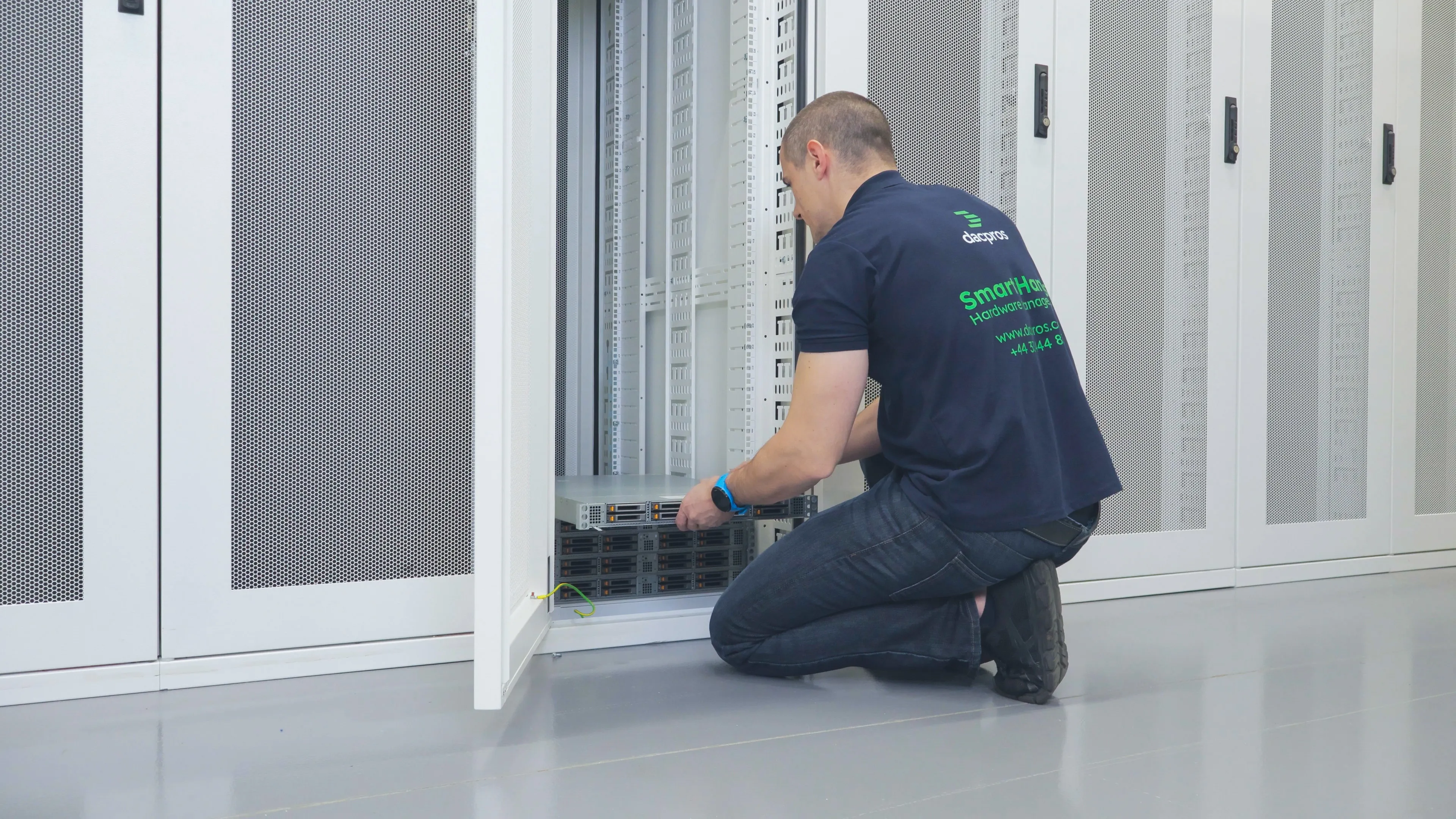
- Part swaps. Failed PSUs, disks, optics and cards identified, swapped and verified.
- Vendor escort and live sessions. A trusted pair of hands on site while your vendor or your own team works the console remotely.
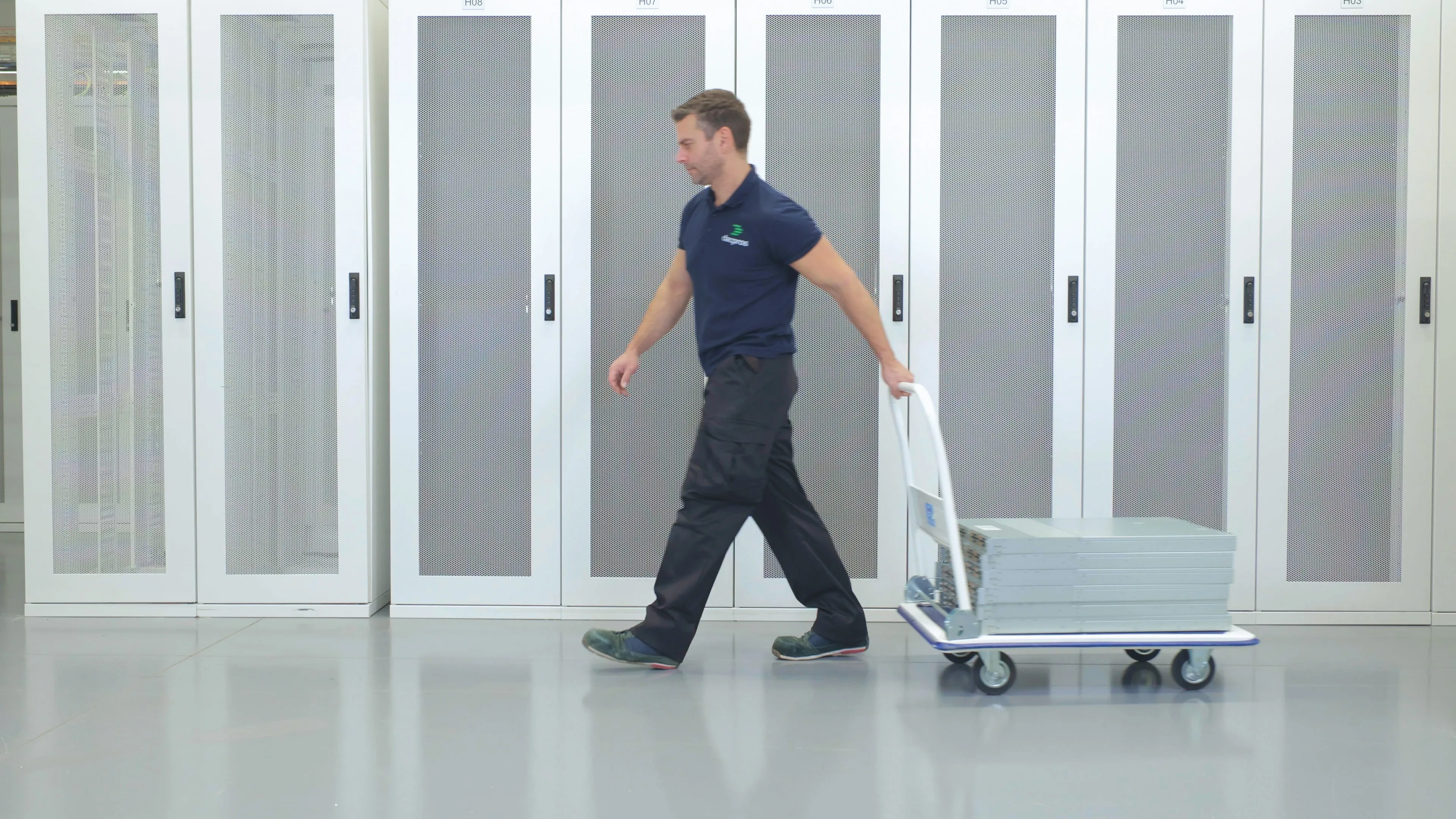
- New hardware. Racking, powering, cabling and labelling equipment as a planned build, with test results and a handover record.
- Faulty hardware. Identifying, swapping and returning units under an RMA.
- Diagnostics. On-site fault finding when remote tools run out of road.
What needs a person on site, and what does not
A simple test sorts most tasks. If it can be done over a network connection, it can usually be done remotely. If it needs hands, eyes or a part, it needs someone in the building.
| Task | Usually needs someone on site? |
|---|---|
| Operating system updates, configuration changes, monitoring | No |
| Power-cycling a device with a working out-of-band management interface | No |
| Power-cycling a device with no working management interface | Yes |
| Replacing a failed drive, PSU, optic or card | Yes |
| Re-seating or re-running a cable | Yes |
| Racking new equipment | Yes |
| Reading a status light or confirming a fault indicator | Yes |
| Receiving a delivery and recording serial numbers | Yes |
Good out-of-band management cuts the number of call-outs you need. It does not remove them.
What stays with your team
Outsourcing the physical work does not mean outsourcing the decisions. Your team normally keeps:
- The contract with the operator, and the authority to approve who may access your cabinets.
- The runbook. For instruction-led work, you supply the steps in order. Remote hands carries them out as written.
- The systems. Operating systems, applications and monitoring remain yours unless you agree a different scope.
- The judgement on risk. You decide whether a change goes ahead and when.
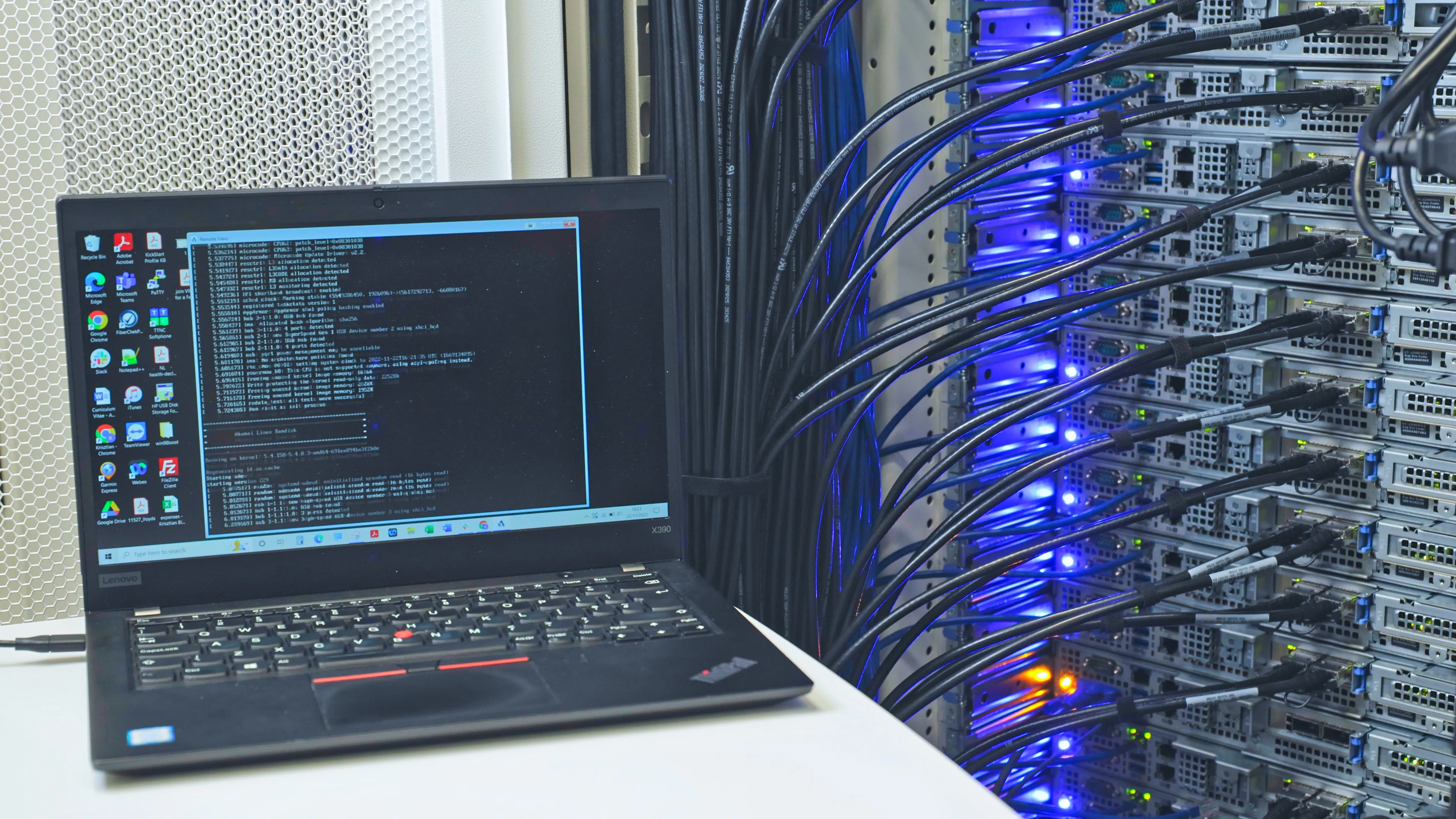
There is a middle ground. On one cabinet build, DACPROS engineers also configured the switches, set up iDRAC on the Dell servers, installed Linux and applied the IP addressing, so the client’s remote team could log in and start work. That was agreed as part of the project scope. A routine instruction-led visit does not include it. Be explicit about which you want. The remote hands vs smart hands guide explains the difference between work where you supply the steps and work where the engineer applies judgement.
One-off call-outs or a retainer
Colocation demand is uneven. Some months there is nothing, then a failed disk, then a batch of new servers.
- A one-off call-out suits occasional needs. You describe the task, the site and the date, and the provider scopes and schedules it.
- A monthly retainer suits steady or predictable demand, where you want a provider who already knows the site, your cabinets and your conventions.
The cabinet build case study shows the pattern. After the first build, the client brought DACPROS back repeatedly, sometimes after long gaps, for troubleshooting, hardware upgrades, memory and disk replacements and batches of new servers. Some visits were a few hours for one engineer, and adding servers was a project needing several people and a plan. Because the racks were labelled and organised when built, later work did not disturb neighbouring cables.
Operator remote hands or an independent engineer?
Many colocation operators offer on-site assistance. Services, hours and charges vary, so read the terms before you rely on it.
The operator’s team is often enough when:
- the task is small and you can write exact steps
- you do not need a formal record or photographs
- speed and convenience matter most
An independent engineer is often a better fit when:
- the work is planned, with cabling, configuration or testing
- you need documentation, labelling to a standard or a handover pack
- you use more than one facility and want a consistent method
- you want the same engineers to return and learn your environment
For a larger example, see the live core cabinet rebuild, where four core router cabinets on live infrastructure were audited, rebuilt one a week and labelled to the documentation. Choosing between providers is covered in how to choose a data centre services provider.
What to settle before the first call-out
- The facility and the cabinet. Site, cabinet number, U position and asset labels.
- Access. Whatever the facility needs to let an engineer in, such as a booking reference or a site contact. Colocation providers set their own access rules.
- The steps. A numbered list an engineer can follow without guessing.
- Parts. Any parts you supply, delivered to site and clearly identified in advance.
- A contact. Someone on your side who can be reached during the visit.
- What done looks like. What you want confirmed, photographed or reported.
- Hours and timing. Agree the date and window up front, and what happens if the work cannot be completed.
DACPROS provides colocation infrastructure support within its smart hands service, from a hub in Hammersmith, London, and attends sites across the UK. Operating hours are Monday to Friday, 09:00–17:00. Attendance is scheduled according to location, scope and engineer availability. Out-of-hours attendance may be available if arranged in advance, and DACPROS does not offer a guaranteed response time.
If you are working out what to hand over, send us the facility and the task on our contact page and we will tell you plainly what is possible and when.